
VALD strength testing that informs each review
At Adapt, your physiotherapist can measure strength and the difference between your left and right sides with VALD ForceDecks and ForceFrame when a number will help decide your next step. The result sits beside how your supervised sessions have felt, so changes to your program come from both, and each test is chosen for the question being asked.
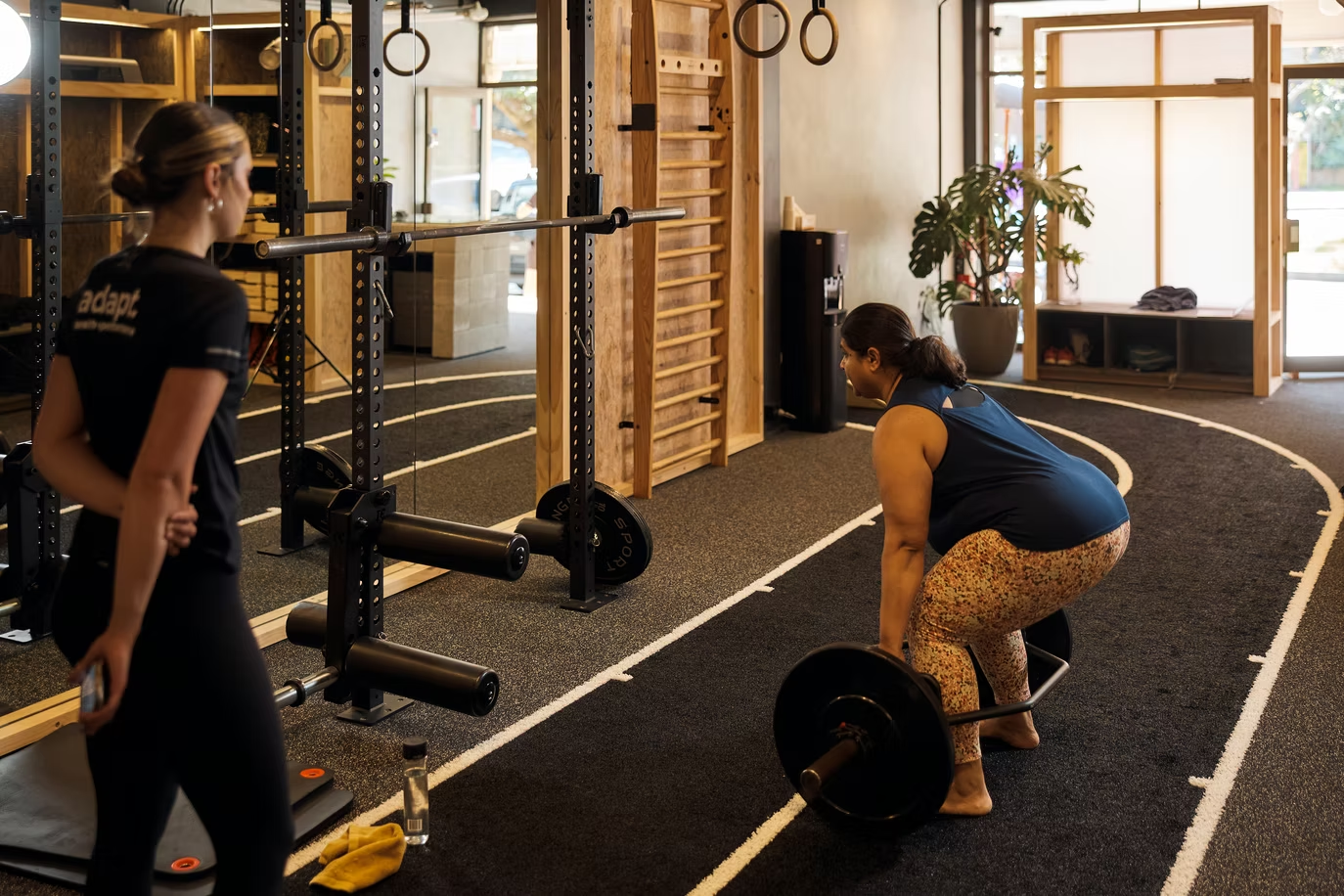
How a strength test runs
Testing happens inside a physiotherapy review, so the result is explained and used in the same appointment.
Choose the question
Your physiotherapist decides what needs measuring, such as strength on each side or how you push into the ground.
Set the position
You warm up, then the test position is set so the same test can be repeated later.
Run the test
You push, pull or jump on the device while it records the force from each side.
Read the result
Your physiotherapist explains the numbers and compares them with any earlier test.
What VALD measures at Adapt
Adapt uses two VALD devices, chosen for the movement being assessed.
ForceDecks
Dual force plates that record how hard and how evenly you push into the ground during jumps and other selected movements.
ForceFrame
A fixed frame that measures isometric strength: how hard one muscle group can push or pull, one side at a time.
Left and right
Both devices compare sides, which helps when one leg or arm has been injured or operated on.
Change over time
Repeat tests use the same set-up, so a later result can be compared with your first.
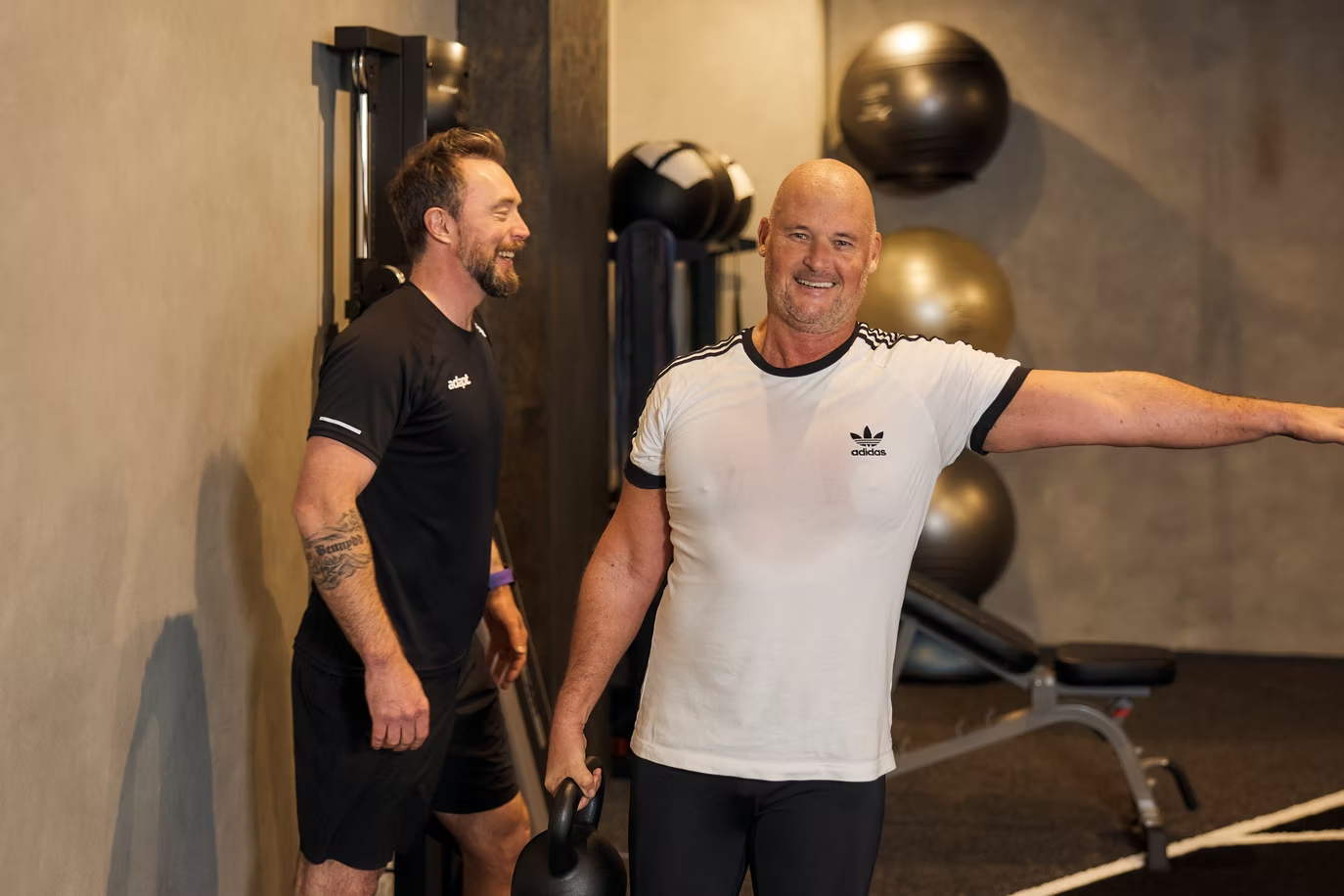
Numbers sit beside how training feels
A test shows strength on the day. Your physiotherapist weighs it with your supervised sessions, symptoms and goals, and with your surgeon's guidance after an operation.
How results are used in your rehab
The same devices can answer different questions after ACL reconstruction, knee replacement or during sports physio, so the test is chosen for the decision in front of you.
| What may be measured | How your physiotherapist uses it | |
|---|---|---|
| After ACL surgery | ForceDecks land-and-hold or jump force from each leg, and ForceFrame isometric strength of groups such as the knee flexors | Compared left and right, and with any earlier test, to set the next strength block |
| After knee replacement | ForceFrame isometric strength and ForceDecks sit-to-stand or squat force through each side | Compared with the other side and earlier tests to decide how much load the next block can hold |
| Shoulder rehab | ForceFrame isometric strength of a muscle group, compared left and right | Used with how the sessions have felt to decide whether the next block can add load |
| Returning to sport | ForceDecks jump and landing force, plus ForceFrame isometric strength where a side-to-side comparison is useful | Read with the clinical review and the demands of the sport, as one input to the next block |
Is strength testing covered by my health fund?
No, strength testing is not claimable on extras cover. Physiotherapy consults may be claimable, depending on your fund and level of cover, and the team confirms fees before you start.
Fees and rebatesWho runs your testing
Both Sam Baylis and John MacAuliffe run tests inside physiotherapy reviews.

Chooses which VALD test will inform the next decision and reads the numbers with you.
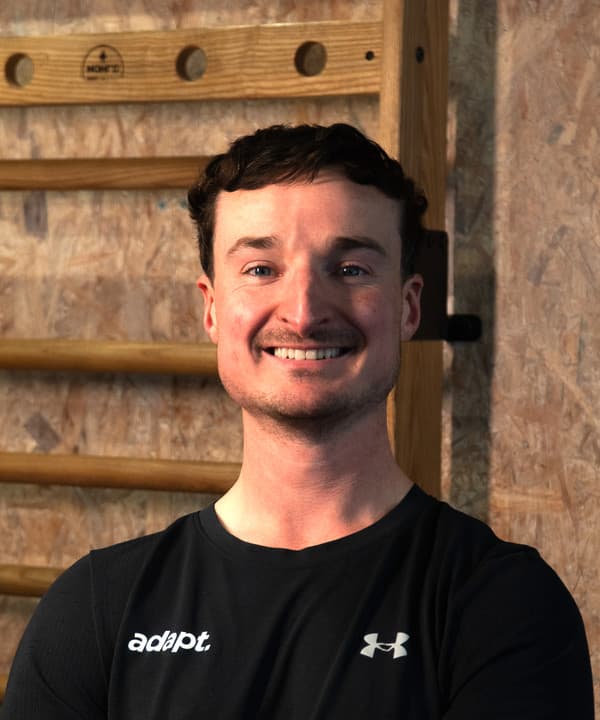
Runs tests inside reviews and compares each result with the last one and the other side.
The next block starts on the gym floor
After a review, the coaching team, led by James Bowen, runs the updated program in supervised sessions.
Book an assessment
Questions about strength testing
Book an assessmentWhat does a force plate test feel like?
You stand on two ForceDecks plates and jump, squat or land as your physiotherapist instructs. The effort is short and is set to what you can currently do, so the test matches the stage of your rehab rather than a standard battery.
Do I need to be well into rehab before I am tested?
No. The test is chosen for the stage you are in, and early on your physiotherapist may use a simpler measure or none at all. Jumping tests wait until jumping is part of the plan, while isometric holds on ForceFrame can be used sooner when a strength comparison is useful.
Can a test tell me when I can return to sport?
No. No single test decides a return to sport. The decision combines the clinical review, testing where it is relevant, your surgeon's guidance after an operation, and the demands of your sport. See sports physio for how Adapt plans around training and fixtures.
Will I see my results?
Yes. Your physiotherapist goes through the numbers with you at the review and records them in your clinical notes, so you can see what was measured and how it compared with any earlier test.
Do I need to prepare for a strength test?
Wear the clothes and trainers you train in. Your physiotherapist runs a warm-up before the test and sets the position so the same set-up can be used at the next review. You do not need to arrive having done extra training that day.
Why is my uninjured side tested too?
Your uninjured side gives a reference from your own body, so the comparison is personal rather than a generic target. That side-to-side difference is one input to the plan, read with how the sessions have felt and any earlier result.
Ask whether testing fits your rehab
Tell us about the injury or surgery and the team will explain when testing would be part of your plan.
Registered physiotherapists
Sam and John are registered with the Physiotherapy Board of Australia, and their AHPRA registration details are on their profiles.
Last updated on 21 October 2026